Can We Achieve Global Equality in Resources and Quality of Life for Everyone?
- Fen Bushu
- Apr 23
- 13 min read

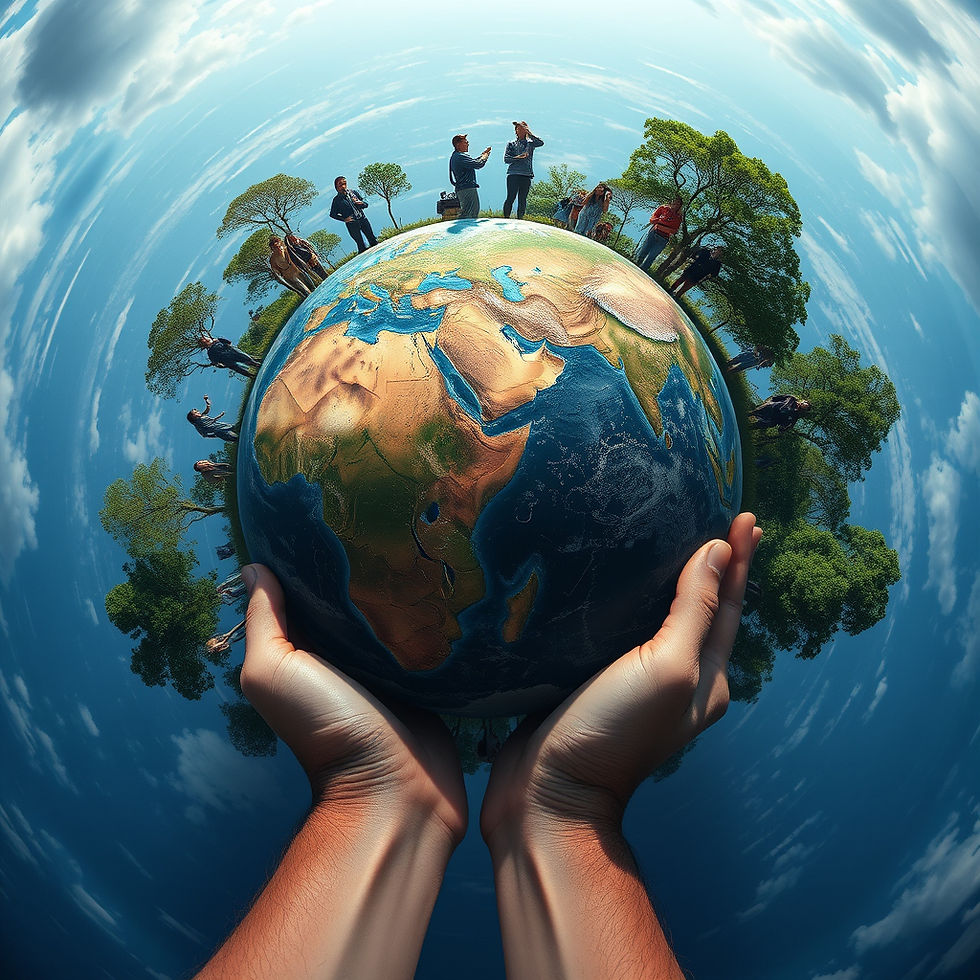
The idea of a world where every person enjoys a decent life, regardless of where they live geographically , is both inspiring and daunting. Inequality in resources and quality of life remains one of the most pressing challenges of our time. While some regions thrive with abundant wealth and opportunities, others struggle with poverty, limited access to education, healthcare, and basic necessities. This raises a critical question: can global equality in resources and quality of life ever become a reality?
Will there be a time where anyone can move any part of the world and still live the same decent life? This question invites a profound exploration of the future of global mobility, societal structures, and the evolving nature of work and living conditions. The concept of being able to relocate freely across the globe while maintaining a standard of living comparable to one’s home environment raises numerous considerations, including economic, social, and technological factors.
As we look toward the future, advancements in technology play a crucial role in shaping the possibilities of global mobility. With the rise of remote work enabled by digital communication tools, individuals may find themselves less tethered to specific geographical locations. This shift allows people to choose where they want to live based on personal preferences rather than job constraints. Imagine a scenario where someone from a bustling urban center in North America can choose to relocate to a tranquil village in Southeast Asia, enjoying the same salary and benefits while immersing themselves in a different culture and lifestyle.
However, to achieve this ideal of universal mobility and consistent quality of life, several challenges must be addressed. Economic disparities between regions remain a significant hurdle. While some areas boast high living standards and robust job markets, others struggle with poverty and limited opportunities. In order to ensure that individuals can move freely while maintaining a decent quality of life, there must be concerted efforts to bridge these gaps. This could involve international policies that promote equitable wage structures, investment in underdeveloped regions, and the establishment of a global safety net that supports individuals regardless of their location.
Additionally, social factors come into play when considering the implications of such mobility. Cultural integration, community support systems, and access to essential services like healthcare and education are vital for individuals who relocate. A world where anyone can move anywhere must also encompass efforts to foster inclusive societies that welcome newcomers and provide them with the resources necessary to thrive. This could mean creating programs that assist with language barriers, cultural acclimatization, and professional networking in new locales.
Furthermore, environmental considerations cannot be overlooked. The impact of climate change and the sustainability of various regions will influence where people choose to live and the viability of those areas as long-term residences. As climate patterns shift, some regions may become less hospitable, prompting migration to more stable environments. In this context, it will be essential to develop resilient communities that can support diverse populations while also addressing environmental challenges.
In conclusion, while the dream of relocating anywhere in the world while enjoying a decent quality of life is an appealing vision for the future, it is contingent upon overcoming significant economic, social, and environmental challenges. As we advance, it will require collaborative efforts from governments, organizations, and individuals to create a world where such mobility is not only possible but also sustainable and equitable for everyone.
It's truly disheartening to acknowledge that we continue to experience a significant and persistent gap between different worlds, particularly when contrasting the so-called First World with the Third World. This disparity is not merely economic but extends into various facets of life, including education, healthcare, and access to basic resources. Now, let us consider a hypothetical scenario where nature intervenes dramatically, perhaps through the violent shifting of tectonic plates, leading to catastrophic events such as tsunamis, earthquakes, and other natural disasters that render certain regions uninhabitable. In such a situation, one might wonder whether individuals from the well-developed world would be equipped to handle the drastic changes and challenges that could arise as a result of these environmental upheavals.
In the face of such calamities, the resilience and adaptability of people in developed nations would undoubtedly be put to the test. These individuals often enjoy a high standard of living, characterized by advanced infrastructure, robust emergency response systems, and comprehensive social safety nets. However, the question remains: would these advantages be sufficient to mitigate the impacts of widespread natural disasters? Would the quality of life for those in developed regions remain relatively unchanged, even as the world around them shifts dramatically and force them to relocate? The reality is that while some may possess the resources and knowledge to navigate through crises, others may find themselves ill-prepared for the challenges that accompany such unprecedented changes.
Moreover, the interconnectedness of our global society means that events in one part of the world can have far-reaching implications elsewhere. For instance, if a significant portion of the population in a developed country were to face displacement due to environmental disasters, the strain on resources, infrastructure, and social systems and health care could lead to a ripple effect, impacting economies and communities far beyond the initial epicenter of the disaster. This interconnectedness raises important questions about our collective responsibility and the need for solidarity across borders, especially in the face of climate change and its inevitable consequences.
The main questions are, due to people having to move from their geographical locations, where they have established their lives, to new areas that are deemed safe, will they experience the same quality of life? This encompasses a multitude of factors, including access to essential resources, the robustness of infrastructure, the stability of the local economy, the effectiveness of social systems, and the availability and quality of health care services, even in the most critical cases. When individuals or families are forced to relocate due to circumstances such as conflict, natural disasters, or economic instability, they often leave behind not just their homes but also their communities and support networks. This transition can lead to significant challenges as they seek to establish themselves in new environments. Firstly, the availability of resources such as clean water, food supplies, and housing is crucial. In many cases, the areas to which they migrate may lack the necessary resources to support an influx of new residents, leading to competition for these limited supplies. This scarcity can result in increased prices and a decline in living standards for both newcomers and existing residents. Secondly, infrastructure plays a vital role in determining the quality of life for displaced individuals. This includes transportation networks, utilities, and communication systems. If the infrastructure in the new location is underdeveloped or overwhelmed by the sudden increase in population, it may hinder access to jobs, education, and essential services, further exacerbating the challenges faced by those who have relocated. Economically, the ability to find stable employment is often a significant concern for migrants. The job market in the new area may be saturated or may not match the skills and qualifications of the incoming population. This can lead to higher unemployment rates and economic instability, which in turn affects the overall quality of life. Social systems, including community support structures, educational opportunities, and cultural integration, are also critical. The ability of newcomers to assimilate into the local culture and establish social connections can greatly influence their well-being. If the social systems are not inclusive or supportive, it may lead to isolation and a sense of alienation among displaced individuals. Finally, health care is a paramount concern, especially for those with pre-existing conditions or critical health needs. Access to quality health care services can vary significantly from one region to another. In some cases, health facilities may be overburdened or inadequately equipped to handle the needs of a growing population, which can lead to poorer health outcomes for those who have relocated. In conclusion, the quality of life experienced by individuals who are forced to move from their geographical locations to areas considered safe is influenced by a complex interplay of resources, infrastructure, economics, social systems, and health care. Each of these factors must be carefully considered to understand the challenges and opportunities faced by displaced populations, even if they won't be relocating forever.
The current tension in this world is largely driven by the significant disparities in economic conditions that exist between different regions. As individuals and families seek better opportunities and a higher quality of life, many are compelled to migrate to one side of the world, often leaving behind their homes, cultures, and communities in search of economic stability and prosperity. This movement is not just a personal choice; it reflects a broader systemic issue where certain areas are thriving while others struggle to meet basic needs. Wouldn't it be nice if every part of the world had the same economic opportunities? Imagine a scenario where living a decent life—characterized by access to quality education, healthcare, and employment—was attainable regardless of geographical location. This vision of global economic equality would not only alleviate the pressures of migration but also foster a sense of community and shared purpose among diverse populations. In such a world, individuals would be empowered to thrive in their native environments, contributing to local economies and cultures without the need to uproot their lives. The potential for innovation, creativity, and collaboration would flourish as people from all walks of life work together towards common goals, ultimately leading to a more harmonious and equitable global society.
In conclusion, while individuals in well-developed nations may currently enjoy a certain level of security and stability, the potential for drastic environmental changes poses a profound challenge to their way of life. The gap between worlds is not merely an issue of economic disparity but one of preparedness and resilience in the face of nature's unpredictability. As we move forward, it is crucial for all nations, regardless of their development status, to engage in meaningful dialogue and cooperation to address these pressing challenges, ensuring that we are all better equipped to face a future that may be fraught with uncertainty.
Barriers to Achieving Equality
Several factors make global equality a complex goal:
Economic Systems and Wealth Distribution
The global economy is structured in a way that benefits wealthier nations and individuals disproportionately. Capital tends to accumulate where infrastructure, technology, and markets are already strong. This leaves poorer regions with fewer opportunities to grow their economies or improve living standards.
Political Instability and Governance
Countries with weak governance, high levels of corruption, or ongoing conflict encounter substantial obstacles when it comes to the equitable distribution of resources among their populations. These challenges are multifaceted and deeply intertwined with the socio-political fabric of these nations. Political instability, which can manifest in various forms such as frequent changes in leadership or overstaying and refusing to give up their role, civil unrest, or outright warfare, often leads to a breakdown in institutional frameworks. This breakdown severely disrupts development efforts aimed at improving the quality of life for citizens and creates an environment that is hostile to both domestic and foreign investment.
In countries where governance is weak, the mechanisms for resource allocation can be heavily skewed, favouring certain groups over others. This favouritism often stems from corrupt practices where officials may divert funds intended for public services into their own pockets or those of their associates. As a result, essential sectors such as education and healthcare suffer immensely. For instance, in regions plagued by corruption, schools may lack basic supplies, and hospitals may be underfunded, leading to a decline in educational outcomes and health indicators. The impact of these deficiencies can be long-lasting, hindering a country's overall development trajectory and perpetuating cycles of poverty.
Moreover, ongoing conflicts further exacerbate these issues by creating an environment of fear and uncertainty. In war-torn regions, infrastructure is often destroyed, making it difficult to deliver services effectively. The chaos of conflict can lead to the displacement of populations, with many individuals fleeing their homes in search of safety, which in turn places additional strain on the neighbouring areas. Humanitarian efforts may be hampered by the lack of security, making it challenging to distribute aid where it is most needed. This situation creates a vicious cycle where the lack of stability prevents effective governance, which in turn leads to further conflict and resource misallocation.
Additionally, the deterrence of investment in critical sectors like education and healthcare is a direct consequence of this instability. Investors typically seek environments where the rule of law is upheld, and where there is transparency and accountability in governance. When these factors are absent, potential investors are likely to view the risks as too high, leading to a lack of funding for initiatives that could improve public services. Consequently, the absence of investment perpetuates the cycle of underdevelopment, leaving countries struggling to address the basic needs of their citizens.
In summary, the interplay between weak governance, corruption, and conflict creates a challenging landscape for resource distribution. The consequences of these issues are profound and far-reaching, affecting not just immediate access to services but also the long-term prospects for development and stability within these nations. Addressing these challenges requires comprehensive strategies that promote good governance, enhance accountability, and foster peaceful resolutions to conflicts, ultimately paving the way for more equitable resource distribution and improved societal outcomes.
Environmental Challenges
Climate change and environmental degradation disproportionately affect poorer communities. Droughts, floods, and resource depletion reduce agricultural productivity and access to clean water, worsening living conditions.
Cultural and Social Factors
Social inequalities based on gender, ethnicity, or caste represent significant barriers that can severely limit access to essential resources and opportunities for specific groups within various countries. These inequalities often persist despite the overall increase in national wealth, highlighting a critical disconnect between economic growth and equitable distribution of resources. For instance, women may face systemic discrimination that hampers their ability to secure employment, access education, or obtain healthcare services, which can perpetuate cycles of poverty and limit their contributions to society. Similarly, individuals from marginalized ethnic groups or lower castes may encounter institutional biases that restrict their social mobility, leading to disparities in income, education, and health outcomes. Moreover, these social hierarchies can create environments where certain groups are systematically excluded from participating in decision-making processes, further entrenching their disadvantaged status. This exclusion not only affects their immediate access to resources but also impacts their long-term prospects for advancement and empowerment. As a result, even in nations experiencing economic prosperity, the benefits of such growth may not be equitably shared, leaving marginalized communities to grapple with the consequences of inequality. Addressing these deeply rooted issues requires comprehensive policy interventions aimed at dismantling the structural barriers that uphold these inequalities. Initiatives such as targeted educational programs, affirmative action in employment, and inclusive health care policies are essential to ensure that all individuals, regardless of their gender, ethnicity, or caste, have equitable access to the opportunities necessary for their development and success. Only through such concerted efforts can societies hope to create a more just and equitable landscape where the fruits of national wealth are accessible to all, thereby fostering a more inclusive and harmonious social fabric.
Examples of Progress Toward Equality
Throughout history, the pursuit of equality has manifested in various forms across different societies and cultures. This relentless quest for fairness and justice has led to significant milestones that have reshaped social, political, and economic landscapes. Below are several noteworthy examples that illustrate the progress made toward achieving equality in various domains. ## Civil Rights Movements One of the most prominent examples of progress toward equality can be seen in the Civil Rights Movement, particularly in the United States during the 1950s and 1960s. Activists like Martin Luther King Jr., Rosa Parks, and Malcolm X played pivotal roles in advocating for the rights of African Americans, challenging systemic racism, and fighting for equal treatment under the law. Landmark legislation, such as the Civil Rights Act of 1964 and the Voting Rights Act of 1965, emerged from this movement, dismantling legal barriers to equality and ensuring that all citizens had the right to vote regardless of their race. ## Gender Equality Advancements Another significant area of progress is in the realm of gender equality. The women's suffrage movement, which gained momentum in the early 20th century, led to women securing the right to vote in many countries, including the United States in 1920 with the 19th Amendment. More recently, the #MeToo movement has brought attention to issues of sexual harassment and violence against women, prompting widespread discussions about consent, workplace equality, and the need for systemic change in how society addresses these concerns. Legislation aimed at promoting equal pay and combating discrimination in the workplace has also gained traction, contributing to a more equitable environment for women in various sectors. ## Economic Equality Initiatives In the economic realm, various initiatives aimed at reducing income inequality and promoting fair labour practices have emerged. The establishment of minimum wage laws, the promotion of fair trade practices, and the implementation of affirmative action policies in hiring and education are all examples of efforts to level the playing field for marginalized groups. Additionally, international movements advocating for the rights of workers in developing countries have gained momentum, emphasizing fair wages, safe working condition, as essential components of economic equality. ## Global Efforts Toward Equality Globally, The Universal Declaration of Human Rights, adopted in 1948, set a foundational standard for human rights that applies to all individuals, regardless of race, gender, sexual orientation, or socioeconomic status. Sustainable Development Goals (SDGs), particularly Goal 5, aim to achieve gender equality and empower all women and girls, highlighting the international community's commitment to addressing inequalities on a global scale. In conclusion, while significant progress has been made toward achieving equality across various sectors, the journey is ongoing. Continued advocacy, education, and legislative efforts are essential to build upon the achievements of the past and address the remaining disparities that persist in society today. Each of these examples serves as a testament to the resilience and determination of individuals and communities striving for a more just and equitable world.
These examples show that targeted efforts can improve quality of life and resource access, even in challenging environments.
What Would It Take to Achieve Global Equality?
Achieving equality in resources and quality of life worldwide requires coordinated action on multiple fronts:
Fairer Economic Policies
Wealth redistribution through progressive developments, education, equity, production and social safety nets.
Support for local economies and small businesses in developing regions.
Trade policies that allow fair access to global markets.
Strengthening Governance and Institutions
Promoting transparency and reducing corruption.
Building stable political systems that prioritize citizens’ welfare.
Encouraging community participation in decision-making.
Addressing Environmental Sustainability
Investing in renewable energy and sustainable agriculture.
Protecting natural resources and biodiversity.
Supporting communities vulnerable to climate change impacts.
Promoting Social Inclusion
Ensuring equal access to education and healthcare for all groups.
Fighting discrimination and promoting gender equality.
Empowering marginalized communities through legal protections and economic opportunities.
The Role of Technology and Innovation
Technology can be a powerful equalizer if used wisely. For example:
Remote learning platforms can bring education to isolated areas.
Mobile banking services provide financial inclusion for people without traditional bank accounts.
Renewable energy technologies can supply power to off-grid communities.
However, technology alone cannot solve inequality. It must be combined with policies that ensure access and address underlying social and economic barriers.
Why Global Equality Matters
Beyond the moral imperative, reducing inequality benefits everyone:
It promotes global stability and peace by reducing poverty-related conflicts.
It expands markets and economic opportunities worldwide.
It helps protect the environment by encouraging sustainable resource use.
It fosters innovation by tapping into diverse talents and perspectives.
Moving Forward
While achieving complete equality in resources and quality of life is a massive challenge, progress is possible with sustained effort. Governments, international organizations, businesses, and individuals all have roles to play. Supporting policies that promote fairness, investing in education and healthcare, protecting the environment, and embracing inclusive technologies are essential steps.
The vision of a world where everyone can live decently, no matter their location, is not just a dream. It is a goal worth pursuing with clear strategies and collective commitment. Each small step toward reducing inequality brings us closer to a more just and sustainable future.



Comments